China messy and five ethnic groups: Reflections on Mr. Bo Yang's Reinterpretation of Chinese History
Reviewing Chinese history with systems analysis2026-01-2000:32:13
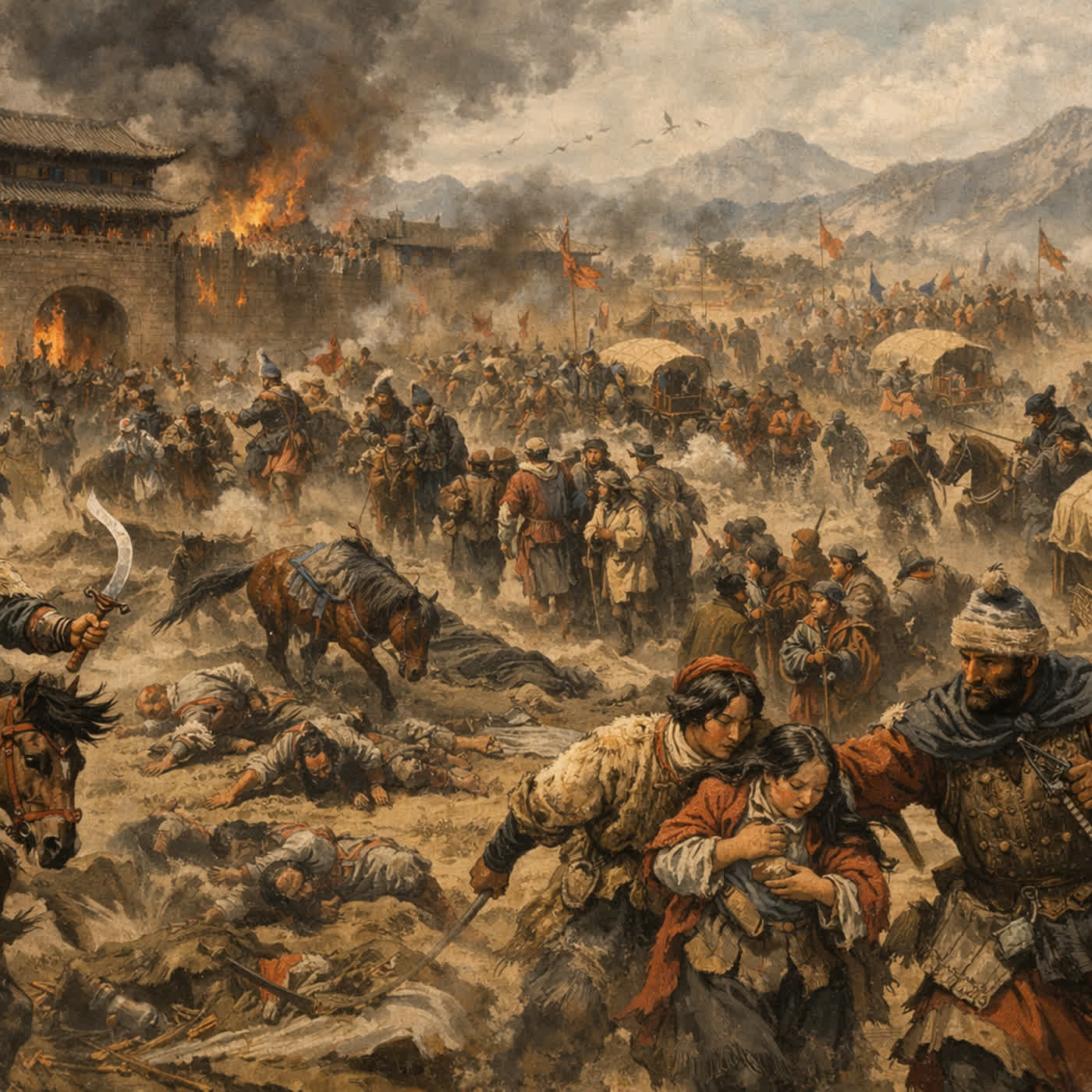
This reflection examines historian Bo Yang's revisionist work on the "Five Barbarians" period (五胡乱华), which he deliberately retitled as 华乱五胡 ("China in Chaos, Five Ethnic Groups") to challenge traditional Chinese historical narratives.
Bo Yang's Two Main Arguments:
Chinese ethnocentrism: Confucianist historians wrongly viewed Chinese civilization as superior and labeled surrounding peoples as "barbarians." Bo Yang argues all humans are equal, and ironically, the Chinese themselves exhibited the most barbaric behavior throughout history—a pattern he sees continuing in modern events in Taiwan and China.
Misplaced blame: Traditional histories blamed external ethnic groups for China's chaos, but Bo Yang insists the Chinese brought disaster upon themselves. Using the principle of personal responsibility, he argues that peaceful, well-governed regions don't invite invasion. The surrounding peoples only took advantage of China's self-inflicted chaos—rational behavior akin to "free-riders" exploiting an unguarded system.
Historical Context:
The chaos began even before Emperor Wu of Jin's death when Empress Jia Nanfeng killed the crown prince, triggering rivalries among royal family members. During this 3-decade period of instability, five (actually more) ethnic groups established regimes in northern China. Rather than merely raiding, many settled permanently, finding it easier to stay than constantly travel.
Bo Yang's Provocative Conclusion:
He argues there are no "pure" Han Chinese—ethnic integration occurred extensively during and even before the Jin Dynasty. Those who claim Han purity are simply uneducated. The Chinese are among the most ethnically mixed peoples on earth.
The Western Jin Dynasty collapsed because royal family members fought exclusively for power, ignoring governance entirely. Eventually, powerful ministerial families from the scholar-gentry class (士族) unified to support Sima Rui, dynasty co-founder Sima Fu’s youngest son, establishing the Eastern Jin Dynasty in Hangzhou—but only after securing veto power over imperial decisions for themselves and future generations.


