Drive Bright Glasses Reviews: An Honest Look at Night Driving Aids
Drive Bright Glasses Reviews2026-01-2100:00:53
Drive Bright Glasses Reviews (Published: Jan 21 2026, 10:35 PM EDT) By Ronaldo Smith
If you have ever gripped the steering wheel a little too tight when an oncoming truck blasts its high beams, or if you’ve found yourself squinting to find the lane markers during a rainy evening commute, you are not alone.
Driving at night has changed. It isn’t just about the dark anymore; it is about the light. Modern LED headlights are brighter, bluer, and more piercing than the halogen bulbs of the past. For many drivers, this results in a dazzling glare that can cause momentary blindness—a terrifying few seconds where you travel hundreds of feet without seeing the road clearly.
You are likely reading this because you are looking for a solution, and you’ve come across Drive Bright Glasses. You have seen the ads promising clear vision and reduced glare. But as with any product that claims to solve a safety issue, you are right to be skeptical. Do they actually work? Are they just yellow plastic, or is there real tech inside?
I wrote this review to break down exactly what these glasses are, how they function in real-world scenarios, and who should—and shouldn’t—buy them. No hype, just the practical details you need to decide if they belong in your glovebox.
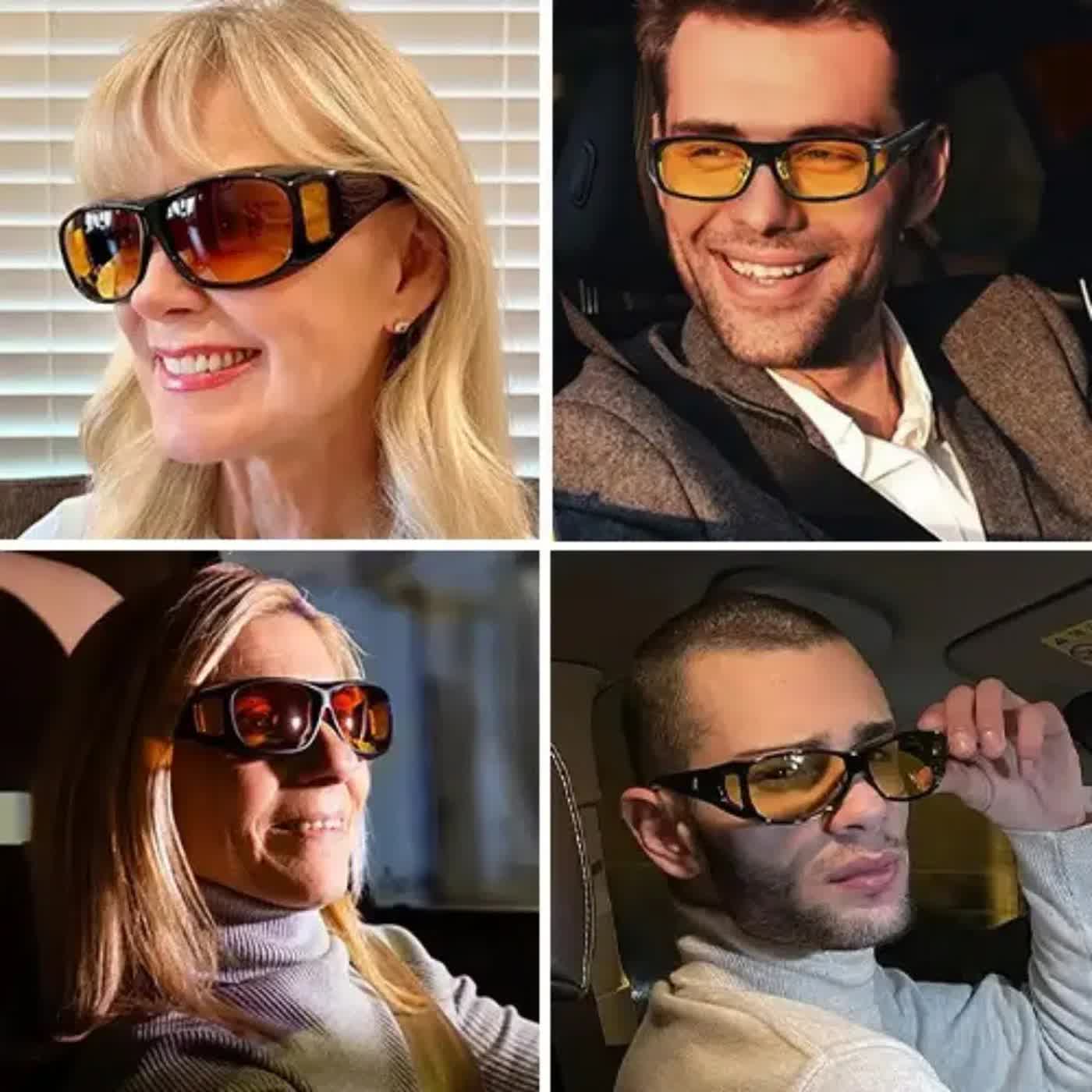
At their core, Drive Bright glasses are specialized eyewear designed to filter specific wavelengths of light. Think of them as "audio noise-canceling headphones," but for your eyes.
They are designed with a few specific problems in mind: high-beam glare, reduced contrast in rainy or foggy weather, and the general eye strain that comes from focusing on dark roads for hours.
Here is the breakdown of the physical design:
The Lens: They utilize a yellow-tinted, polarized lens. This isn't an aesthetic choice; yellow is the specific color needed to filter out the high-energy blue light emitted by modern xenon and LED headlights.
The Frame: They are built with TR90 material, which is a thermoplastic technology known for being incredibly durable, flexible, and lightweight.
The "Fit-Over" Design: This is perhaps the most practical feature. They are slightly larger than standard sunglasses and feature a deep frame, allowing them to be worn comfortably over your existing prescription glasses.
This is a common question. Standard sunglasses are designed to darken your entire field of view to block sunlight. If you wear them at night, you are making the dark parts of the road even darker, which is dangerous. Drive Bright glasses are designed to let the necessary light in while filtering out the blinding spikes of light.
Check the current availability and pricing for Drive Bright Glasses here
To understand if these will work for you, you have to understand the technology they claim to use: GlareCut Technology.
When you drive at night, your eyes are dilated to let in as much light as possible. When a bright LED headlight hits your dilated pupil, it scatters inside the eye, causing that "starburst" or "halo" effect that washes out your vision.
Drive Bright aims to mitigate this in two ways:
Blue Light Filtering: The yellow tint neutralizes the harsh blue spectrum of modern headlights. By shifting the light spectrum toward yellow, the light feels softer and less "sharp" to the human eye.
Polarization: Light from headlights and wet roads scatters in horizontal waves (glare). Polarized lenses act like venetian blinds, blocking these horizontal waves while letting vertical light (the image of the road) pass through.
The result isn't that the headlights disappear—that would be unsafe. Instead, the blinding white "spike" of light is dampened down to a manageable yellow glow, allowing you to look past the car and see the road markings again.
Let’s get into the driving experience. If you order a pair, here is what the first drive will likely feel like.
This is the main test. Without the glasses, an oncoming SUV might make you look away toward the shoulder to avoid being blinded. With Drive Bright glasses, you will still see the bright lights, but the "pain" factor is significantly reduced. The sharp white light becomes a duller yellow. You likely won't have to look away as drastically, maintaining better situational awareness.
This is where many users find the most value. Rain turns asphalt into a mirror, reflecting streetlights and headlights everywhere. The yellow tint increases contrast. Suddenly, the white lane markers (which usually blend into the wet grey road) pop out more clearly. The "visual noise" of the rain reflection is cut down, making the drive feel much less chaotic.
During those grey hours of dawn or dusk, or in heavy fog, vision can be flat and fuzzy. The glasses add definition to objects, helping you distinguish between a pothole, a shadow, and an actual obstacle on the road.
See if Drive Bright is right for your commute here
Drive Bright is a tool, not a miracle cure. It is perfect for some, but not necessary for everyone.
You wear prescription glasses: The fit-over design saves you hundreds of dollars compared to buying prescription night-driving lenses.
You have light sensitivity (Photophobia): If you find yourself physically wincing at bright lights, the softening effect of these lenses can reduce headaches and eye fatigue.
You drive in rural areas: If you deal with unlit roads where the only light comes from oncoming traffic, the contrast boost is very helpful.
You are an older driver: As we age, our eyes take longer to recover from glare. These glasses act as a buffer, reducing the recovery time needed after a bright flash.
You expect night vision goggles: These do not amplify light. They clarify it. If you are driving in pitch black with no headlights, these will just make it darker.
You have untreated cataracts: While these glasses help with glare, they cannot fix physical clouding of the eye lens. Always consult an eye doctor for medical vision issues.
You want to wear them during the day: These are specifically tuned for low light. Wearing them in bright sunlight isn't recommended as they aren't dark enough to protect from full sun exposure.
In the spirit of a fair review, let’s talk about the limitations.
The "Yellow World" Adjustment When you first put them on, everything is yellow. It can feel strange for the first few minutes. Your brain adjusts relatively quickly (usually within 10 minutes), and you stop noticing the tint, but the initial feeling can be off-putting for some.
The Peripheral Gap While Drive Bright features a wrap-around design to block side glare (light entering from the side of your head), the fit depends on your face shape. If you have a very narrow face, you might still get some light leakage around the edges. However, for the vast majority of adults, the fit is snug and secure.
Not a Medical Device It is important to reiterate: these glasses do not correct vision. They improve the conditions in which you see, but they do not change your prescription.
View the latest price and bundle options here
If you are going to wear something on your face for a two-hour drive, it cannot pinch your nose or hurt your ears.
The use of TR90 material is a significant plus here. TR90 is a polymer material that is incredibly flexible. You can bend the arms significantly without them snapping. This memory-flex capability means the glasses contour to your head shape without creating pressure points.
For those wearing them over prescription frames, the top ridge of the Drive Bright glasses is designed to "sit" on your existing frames, distributing the weight so they don't slide down your nose. It is a thoughtful design choice that acknowledges the primary user base.
Are they worth the investment?
When you look at the cost of safety, the math is simple. A pair of prescription driving glasses can cost upwards of $200 or $300. Drive Bright offers a non-prescription alternative that works with your current vision correction for a fraction of that price.
Even if you only use them for bad weather—rain, snow, or fog—having them in the glove compartment provides peace of mind. It’s like having a good ice scraper; you don't use it every day, but when you need it, you are incredibly glad you have it.
Q: Will these fit over my specific prescription glasses?
A: Drive Bright is designed with a "universal fit" sizing. They are made to accommodate most standard rectangular, oval, and round frames. Unless you wear exceptionally large, oversized "cat-eye" or novelty frames, they should fit comfortably over the top.
Q: Can I use these for night driving if I don't wear prescription glasses?
A: Absolutely. While they are designed to fit over glasses, they work perfectly fine as standalone glasses. The wrap-around design just gives you extra protection from side glare.
Q: Do these make the road look brighter?
A: Technically, no lens can "add" light. However, by blocking the blinding glare and increasing contrast, they make the objects on the road (like signs, lines, and pedestrians) easier to perceive. The visual effect is a clearer, more defined view, which many users interpret as "brighter."
Q: Can I wear these for computer work?
A: The yellow tint is similar to "blue light blocking" computer glasses. While you could wear them to reduce eye strain from a monitor, they are polarized and optimized for distance vision and road glare, so they might be overkill for office use.
Q: How do I clean them?
A: Treat them like any high-quality eyewear. Use a microfiber cloth and a lens cleaning solution or mild soap and water. Avoid using paper towels or your shirt, as dust particles can scratch the polarized coating over time.
Driving safety is not an area where you want to cut corners. If you are perfectly comfortable driving at night and have no issues with glare, you probably don't need these.
However, if you are part of the growing number of drivers who dread the drive home because of blinding LEDs, astigmatism flare-ups, or poor weather visibility, Drive Bright Glasses are a solid, low-risk investment.
They deliver on the promise of reducing glare and improving contrast without resorting to expensive medical solutions. They are durable, practical, and effective at turning a stressful, white-knuckle drive into a calm, manageable commute.
Sometimes the simplest solutions are the best. Reducing the glare doesn't just help you see better; it helps you relax. And a relaxed, alert driver is a safer driver.
Click here to get your pair of Drive Bright Glasses today