
Orgone Energy Motor Review: Is It DIY Off-Energy Technology or Just Hype?
Management Insights2026-02-2600:01:48
Interest in alternative and experimental energy concepts has increased worldwide as people search for new ways to understand energy, efficiency, and natural systems. One concept that continues to generate curiosity is Orgone Energy, and within this field, the Orgone Energy Motor has become a topic of discussion among researchers, hobbyists, and independent experimenters.
The idea of Orgone Energy was introduced in the mid-20th century by Wilhelm Reich, who described it as a universal life energy present in nature and living organisms. Reich believed that this energy could be accumulated and influenced through specific material arrangements.

It is important to note that Orgone Energy theory is not accepted by mainstream science, and there is no formal scientific consensus supporting its existence as a measurable physical force. However, the concept has continued to influence alternative research communities, leading to the development of experimental devices such as orgone accumulators, orgonite structures, and eventually, the Orgone Energy Motor.
Because of its controversial background, the topic requires careful explanation and honest limitations, especially when presented to potential users or buyers.
An Orgone Energy Motor is generally described as an experimental or demonstrational device designed to explore whether specific material combinations and structural designs can interact with environmental energy fields in a way that produces observable motion or effects.
Unlike conventional electric motors, an Orgone Energy Motor:
Is not certified as a power-generating device
Does not follow established electrical engineering standards
Is not intended to replace traditional energy systems
Instead, it is typically used for:
Experimental observation
Educational demonstrations
Personal research and curiosity
Learning about alternative theories
Understanding this distinction is essential for building trust and avoiding misunderstandings.
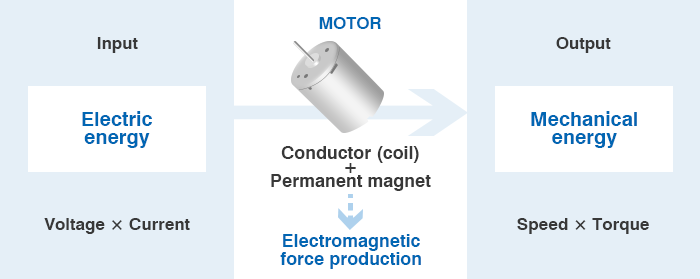
While designs vary widely, most Orgone Energy Motors include a combination of organic and inorganic materials, a concept rooted in Reich’s original orgone accumulator designs.
Common materials may include:
Resin or polymer binders
Metal shavings or filings (aluminum, copper, brass)
Copper wire or coils
Magnets
Rotational components or small motors for demonstration
Non-conductive structural supports
The theory behind these materials is that alternating organic and inorganic layers may influence energy accumulation or movement. However, any observed effects are experimental and not guaranteed.
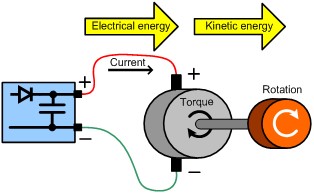
From an alternative research perspective, the proposed working principle is based on three ideas:
Material Interaction Organic and inorganic materials are arranged in a structured pattern to create an environment where subtle energy interactions may occur.
Energy Accumulation Concept The structure is believed by proponents to attract or organize ambient energy, though this remains theoretical.
Motion or Response Observation Any movement, rotation, or measurable change is observed as part of experimentation, not as proof of consistent energy generation.
It is critical to emphasize that any observed results are subjective, inconsistent, and highly dependent on environmental factors, such as temperature, humidity, magnetic fields, and measurement methods.

One of the biggest challenges in the Orgone Energy niche is misinformation. Claims such as “free energy,” “unlimited power,” or “guaranteed output” significantly damage credibility and trust.
A responsible approach clearly states that:
Results are not guaranteed
Devices may produce no observable effect
Mainstream science does not validate the concept
Outcomes vary between users
Transparency does not reduce interest—it increases credibility, especially among serious experimenters.
Despite skepticism, interest continues for several reasons:
Some individuals are interested in exploring ideas outside conventional scientific frameworks.
Students and hobbyists often use such devices to understand material science, magnetism, and experimental design.
Orgone Energy has a unique place in the history of alternative science, which attracts researchers and writers.
Many users enjoy assembling, modifying, and testing experimental devices as part of hands-on learning.
These motivations are valid when approached responsibly.
Hobbyists and independent researchers
Individuals interested in experimental physics concepts
DIY enthusiasts and tinkerers
Educational demonstrations with disclaimers
Guaranteed power needs
Medical or therapeutic purposes
Financial or industrial applications
Anyone expecting certified performance
Being honest about suitability helps prevent disappointment and builds long-term trust.

Before purchasing or using any Orgone Energy Motor, consider the following trust indicators:
Clear Disclaimers Legitimate sellers explain limitations openly.
Real Documentation Photos, videos, and build explanations matter more than marketing language.
No Pressure Sales Tactics Countdown timers and exaggerated promises are red flags.
Educational Content Sellers who teach tend to be more trustworthy than those who only sell.
Open Communication Availability of contact information and support adds credibility.
Any responsible presentation of an Orgone Energy Motor should include:
Educational disclaimers
No medical or scientific claims
No financial guarantees
Respect for reader autonomy
Ethical marketing is especially important in experimental niches where misunderstandings are common.
The Orgone Energy Motor represents an alternative idea that continues to inspire curiosity and discussion. When approached as an experimental and educational concept, it can serve as a valuable learning tool for those interested in unconventional theories and hands-on experimentation.
However, it should never be viewed as a proven energy solution or a replacement for established technologies. The most important elements when exploring this field are critical thinking, transparency, and realistic expectations.
By focusing on education rather than hype, both creators and readers can engage with the concept responsibly and meaningfully.
This content is provided for educational and informational purposes only. The Orgone Energy Motor is an experimental concept. No scientific, medical, or performance guarantees are made. Results, if any, may vary, and mainstream science does not recognize orgone energy as a validated phenomenon.