If you’ve been even slightly active in the “make money online” space recently, you’ve likely noticed how AI writing has taken over everything—from blog content to digital books.
People are using tools to produce content faster than ever before. But the real question many in the US are asking is simple: can this actually generate income, or is it just another trend that looks promising on the surface?
That’s where 357 Prompts for Declassified Espionage Books comes into play. Instead of just reviewing it from a distance, I spent time testing the prompts, generating content, and seeing whether it could realistically be used to create something valuable.
This isn’t just a typical review—it’s a hands-on breakdown of what works, what doesn’t, and whether it’s a viable path for AI-based income in 2026.
▶ Click to Visit 357 Prompts for Declassified Espionage Books Review Official Site for Access Now
What are 357 Prompts for Declassified Espionage Books? (AI writing tool explained)
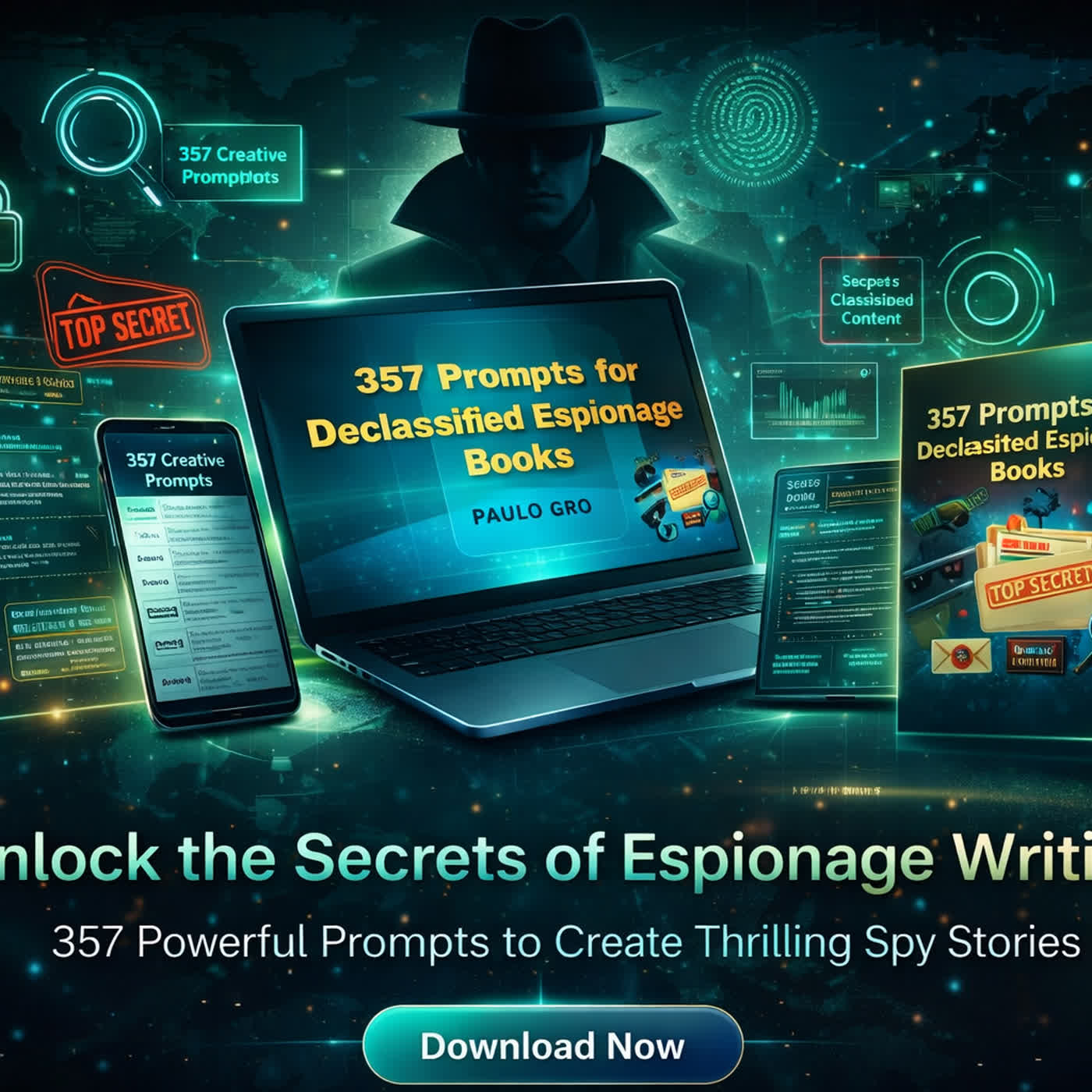
At its core, 357 Prompts for Declassified Espionage Books is a collection of structured AI prompts designed to help you generate espionage-style content using tools like ChatGPT.
But after using it, I realized it’s less about “prompts” and more about direction.
Most people struggle with AI writing not because the tool is bad, but because they don’t know what to ask. You type something vague, and the output ends up being generic. This system removes that guesswork by giving you prompts that are already engineered to produce a specific tone—dark, engaging, and curiosity-driven.
And that matters a lot if your goal is to create content that actually gets clicks and keeps readers hooked.
My first impression using 357 Prompts for Declassified Espionage Books:
I’ll be honest for 357 Prompts for Declassified Espionage Books Review, when I first came across 357 Prompts for Declassified Espionage Books, I wasn’t impressed. There are thousands of free prompts available online, so paying for one didn’t seem necessary.
But I still decided to test it.
Within the first 30 minutes, I noticed something different. The outputs weren’t generic. They had structure, tension, and a narrative flow that felt closer to a real thriller or documentary script.
That’s when it clicked for me, this isn’t about having prompts. It’s about having better prompts that actually guide the AI properly.
How I used 357 Prompts for Declassified Espionage Books to create content?
Here’s exactly how I used it, step by step.
I selected one of the prompts focused on a declassified espionage storyline. Then I pasted it into ChatGPT and customized it slightly with my topic.
Within seconds, I had a draft that was already usable.
Now, was it perfect? No. But it was significantly better than starting from scratch. I refined the content, added my own touch, and expanded a few sections. Within about an hour, I had a solid piece of content ready for publishing.
The biggest takeaway here is simple: it doesn’t do the work for you, but it makes the process much faster and easier.
▶ See How 357 Prompts for Declassified Espionage Books Review System Works
Why 357 Prompts for Declassified Espionage Books content still works in 2026 (high CTR strategy)?
Not all content niches perform equally, and this is something most beginners overlook.
Espionage, hidden history, and “classified secrets” content performs extremely well in the US market because it taps into natural human curiosity. People are drawn to stories that feel exclusive, secretive, or slightly forbidden.
Think about titles like “Declassified CIA Files” or “Hidden Spy Missions.” These naturally generate clicks.
When you combine this type of content with AI writing, you get a powerful combination—high-interest content produced at scale. That’s exactly what this product is trying to help you achieve.
Key features of 357 Prompts for Declassified Espionage Books:
After using the product, here are the features that actually stood out:
Highly structured prompts that guide tone and storytelling
Beginner-friendly setup with no technical skills required
Fast content generation compared to manual writing
Flexible use for blogs, books, scripts, and more
Scalable system once you understand the workflow
These features make it a practical tool, especially if you’re just getting started.
357 Prompts for Declassified Espionage Books pricing (full breakdown):
Let’s talk about the pricing.
The front-end cost of 357 Prompts for Declassified Espionage Books is $17 as a one-time payment. There are no recurring fees for the main product.
This makes it a low-risk entry point, especially for beginners who want to test AI content creation without spending a lot upfront.
OTOs of 357 prompts for declassified Espionage Books (upsells Explained):
Like most digital products, this one also includes optional upgrades:
OTO 1 (~$67): Additional advanced prompts and content packs
OTO 2 (~$97): Extended templates or expanded systems
OTO 3 (~$197): Advanced features for scaling content production
Here’s my honest take: you don’t need these to get started. The main product already gives you enough to understand the system. The upsells are more about speed and scaling rather than necessity.
▶ Get Instant Access to the 357 Prompts for Declassified Espionage Books Review + Exclusive Bonuses
Can you make money with 357 Prompts for Declassified Espionage Books?
Let’s keep this real.
Yes, you can make money using 357 Prompts for Declassified Espionage Books—but not automatically.
This product helps you create content faster, but you still need a strategy. That could include publishing on blogs, Kindle, or using the content for marketing.
What it really does is reduce the time and effort required to produce content consistently. And in today’s digital landscape, consistency is what drives results.
Pros and Cons of 357 Prompts for Declassified Espionage Books:
Pros-
Affordable one-time price ($17)
Beginner-friendly and easy to use
Helps eliminate writer’s block
Speeds up content creation significantly
Produces better AI outputs compared to generic prompts
Useful for side hustles and digital publishing
Cons-
Not a done-for-you system
Requires editing and human input
Results depend on how you use the prompts
Upsells may feel unnecessary for beginners
FAQs about 357 Prompts for Declassified Espionage Books:
Q:1) Is it beginner-friendly?
Yes, it’s designed for beginners and requires no prior experience.
Q:2) Do I need ChatGPT or another AI tool?
Yes, you’ll need an AI writing tool to use the prompts effectively.
Q:3) Is it legit or a scam?
It’s legit. It delivers what it promises—a structured prompt system.
Q:4) Can I use this for Kindle publishing?
Yes, that’s one of the most practical use cases.
Q:5) How fast can I create content?
You can generate drafts in minutes, but editing will take additional time.
Final verdict: Is it worth it in 2026?
So, is 357 Prompts for Declassified Espionage Books the easiest way to make money with AI writing?
Not exactly—but it’s one of the easiest entry points to get started. What it does well is reduce friction, helping you go from an idea to actual content much faster, which is where many beginners tend to get stuck.
It’s not a magic solution, but it is a practical tool.
At $17, it offers a low-risk way to explore AI content creation.
If you’re serious about getting into AI writing and want a structured place to begin, it’s worth considering. However, if you expect instant results without putting in effort, it’s not going to meet those expectations. But if you’re willing to put in the work, it can genuinely help you move forward.