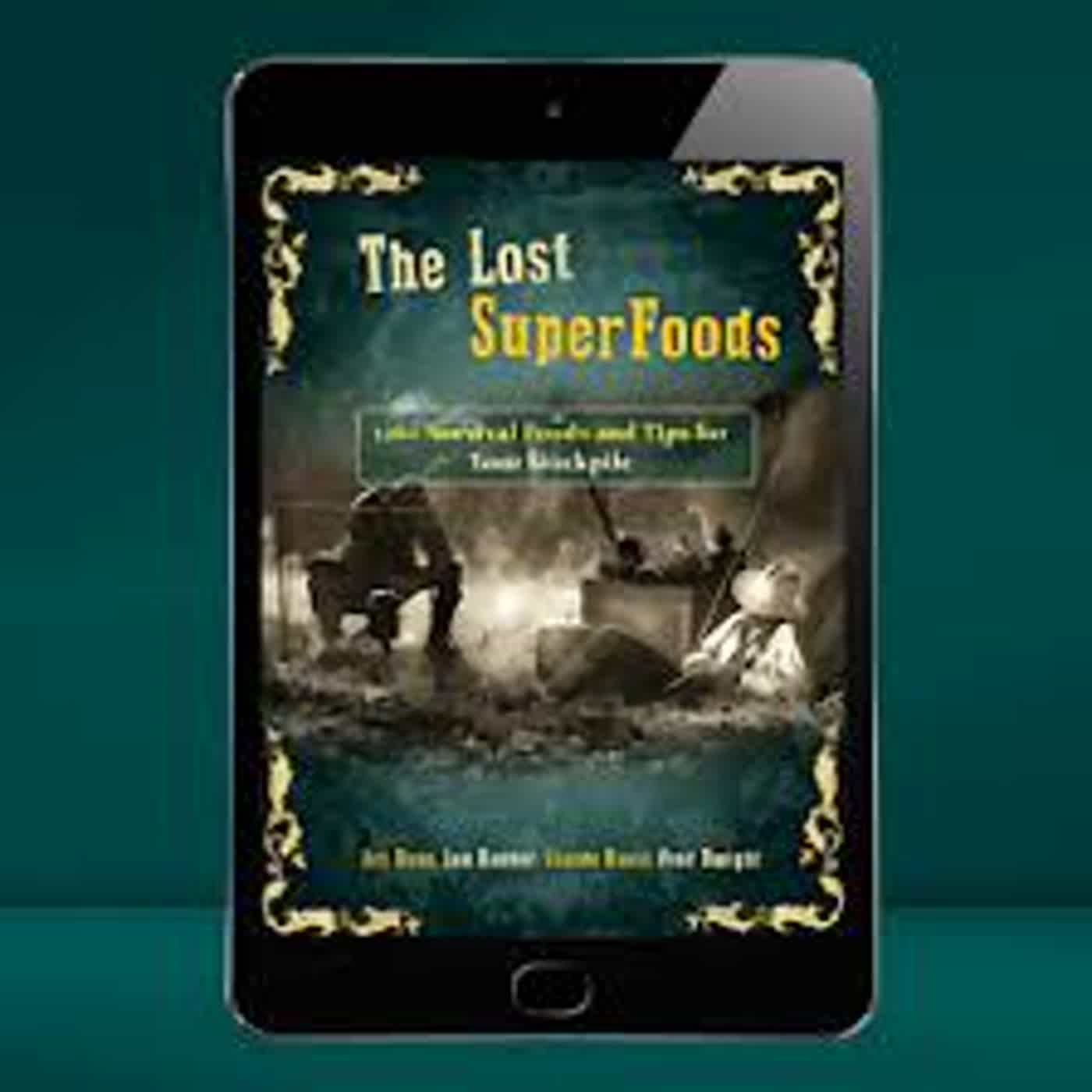
The Lost SuperFoods Reviews 2026: The "Forgotten" Blueprint for Food Independence
James Wright2026-05-1200:01:16
In the shifting economic landscape of 2026, the global food supply chain has faced unprecedented scrutiny. As grocery prices fluctuate and "just-in-time" delivery systems show their fragility, a growing number of households are looking backward to find a path forward. The Lost SuperFoods—a 272-page survival manual authored by Art Rude, Claude Davis, and Fred Dwight—has become the definitive guide for this movement.
👉Don’t Miss Out — Click Here To Purchase From Official Website
While modern prepper culture often focuses on expensive freeze-dried pouches, The Lost SuperFoods explores the "forgotten" preservation techniques used by our ancestors to survive famines, wars, and natural disasters without a single watt of electricity. This 1,000+ word review examines the 2026 edition of the book, its most critical recipes, and whether these historical methods are practical for the modern kitchen.
The Lost SuperFoods is more than just a cookbook; it is an encyclopedia of Shelf-Stable Nutrition. The core premise is that the "Great Depression" generation and the pioneers before them possessed a biological secret: the ability to store high-calorie, nutrient-dense food for years without refrigeration.
In 2026, the book is positioned as a tool for Economic Sovereignty. By teaching users how to preserve food using salt, smoke, fermentation, and air-drying, it allows families to stockpile essential nutrients at a fraction of the cost of commercial "survival kits." The 2026 version features over 126 survival-food entries, each accompanied by full-color photos and precise nutritional breakdowns (fats, carbs, and proteins).
A common mistake in 2026 preparedness is "Empty Calorie Stockpiling"—filling a basement with white rice and beans. The Lost SuperFoods argues that in a true crisis, the body requires Energy Density and Probiotic Vitality. The book focuses on three scientific pillars:
Fat is the most efficient fuel source for the human body, providing 9 calories per gram. The manual teaches how to preserve healthy fats through methods like the "Great Depression Lard Protocol" and clarified butter (Ghee) techniques that keep for years on a shelf.
The primary enemy of food storage is bacteria, which requires moisture to grow. The book provides step-by-step guides on dehydration and curing to lower "water activity" ($a_w$) to levels where pathogens cannot survive, effectively "pausing" the biological decay of meat and vegetables.
Modern diets often lack the gut-health benefits found in traditional foods. The Lost SuperFoods includes recipes like Tarhana (a fermented probiotic ration) and sauerkraut, which not only preserve vitamins (preventing diseases like scurvy) but also support the immune system during stressful periods.
👉Don’t Miss Out — Click Here To Purchase From Official Website
Among the 126 entries, five specific recipes have become the most discussed in the 2026 survivalist community:
The US Doomsday Ration: A secret military superfood developed during the Cold War, designed to provide 2,400 calories per day in a compact, shelf-stable bar.
Pemmican: The ultimate survival food of the Native Americans. A blend of lean dried meat and rendered fat that can stay edible for up to 20 years.
The Siege of Leningrad "Vitality" Stew: A historical recipe used by survivors of one of history's longest military blockades, teaching how to extract maximum nutrition from minimal ingredients.
Hardtack (Pilot Bread): The "survival cracker" that sustained sailors and soldiers for centuries. It is virtually indestructible and can be stored for decades.
Wind-Dried Curds: An ancestral method for preserving dairy without a refrigerator, providing a portable and long-lasting source of protein.
One of the standout features for 2026 readers is the Budget-Friendly Framework. The authors understand that many families are on a tight budget, so they include a plan to build a "year-long" food supply by spending just $5 to $10 per week.
Instead of buying bulk pre-packaged meals, the manual teaches you to buy raw ingredients (like beef trimmings or seasonal produce) when they are cheapest and use the book's techniques to transform them into shelf-stable superfoods. This "Slow Stockpiling" approach ensures that your emergency supply is rotated, familiar, and paid for without financial strain.
The Pros:
Beginner-Friendly: Every recipe includes step-by-step instructions and color photos, making it accessible even to those who have never canned or cured food.
Nutritional Transparency: Unlike many cookbooks, this one tells you exactly how many "macro-nutrients" you are adding to your stockpile.
Historical Context: The stories of how these foods helped people survive the Siege of Leningrad or the Great Depression make the book an engaging read.
Physical + Digital Access: In 2026, the $37 price point usually includes a physical book for your "off-grid" library and a digital version for immediate reading.
60-Day Money-Back Guarantee: This allows users to test several recipes and verify the results before fully committing.
The Cons:
Personal Labor Required: This is not a "buy it and forget it" system. You must invest time into preparing and storing the food yourself.
Acquired Taste: Some historical survival foods (like Hardtack or Pemmican) are functional rather than gourmet; they are designed for survival, not fine dining.
High Sodium Content: Many traditional preservation methods rely heavily on salt, which may require careful management for those with specific health conditions.
👉Don’t Miss Out — Click Here To Purchase From Official Website
As of May 2026, the program is bundled with two high-value digital supplements:
Bonus 1: The Year-Round Greenhouse: A guide on how to build a small-scale greenhouse to produce fresh food regardless of the season or climate.
Bonus 2: Projects for Your No-Grid Survival: A manual on building essential survival tools, such as a solar oven or a pressurized water system, to complement your food storage.
In 2026, The Lost SuperFoods is more than just a survival book—it’s an insurance policy against an uncertain future. While the marketing can sometimes lean toward the dramatic, the core information is grounded in clinical nutrition and proven history.
If you are tired of the rising costs of "emergency food" and want to learn how to be truly self-reliant, this book provides the most practical, cost-effective path available. It takes the mystery out of food preservation and puts the power of survival back into the hands of the individual. For anyone serious about protecting their family from food shortages or economic instability, The Lost SuperFoods is an essential 2026 resource.
👉Don’t Miss Out — Click Here To Purchase From Official Website
Q: Do I need special equipment like a pressure canner?
A: While a canner is helpful, many of the recipes in the book rely on ancestral methods—like salting, smoking, and air-drying—that require nothing more than basic household items.
Q: Is the information different from what I can find for free online?
A: While individual recipes for Pemmican or Hardtack exist online, The Lost SuperFoods provides a curated, step-by-step system with verified nutritional data and historical survival context that you won't find in a single, organized place elsewhere.
Q: Can these foods really last for 20-60 years?
A: Yes, if the storage instructions (cool, dark, and dry) are followed exactly as outlined in the "Storage Hacks" section of the book.
Q: Is there a physical copy?
A: Yes. The physical edition is a high-quality, 272-page paperback. Most 2026 orders ship within 3–5 business days and include the digital version for free.
Q: What if I can't cook?
A: The book was written for the "ordinary American." If you can follow a basic set of instructions and look at a picture, you can successfully create these superfoods.