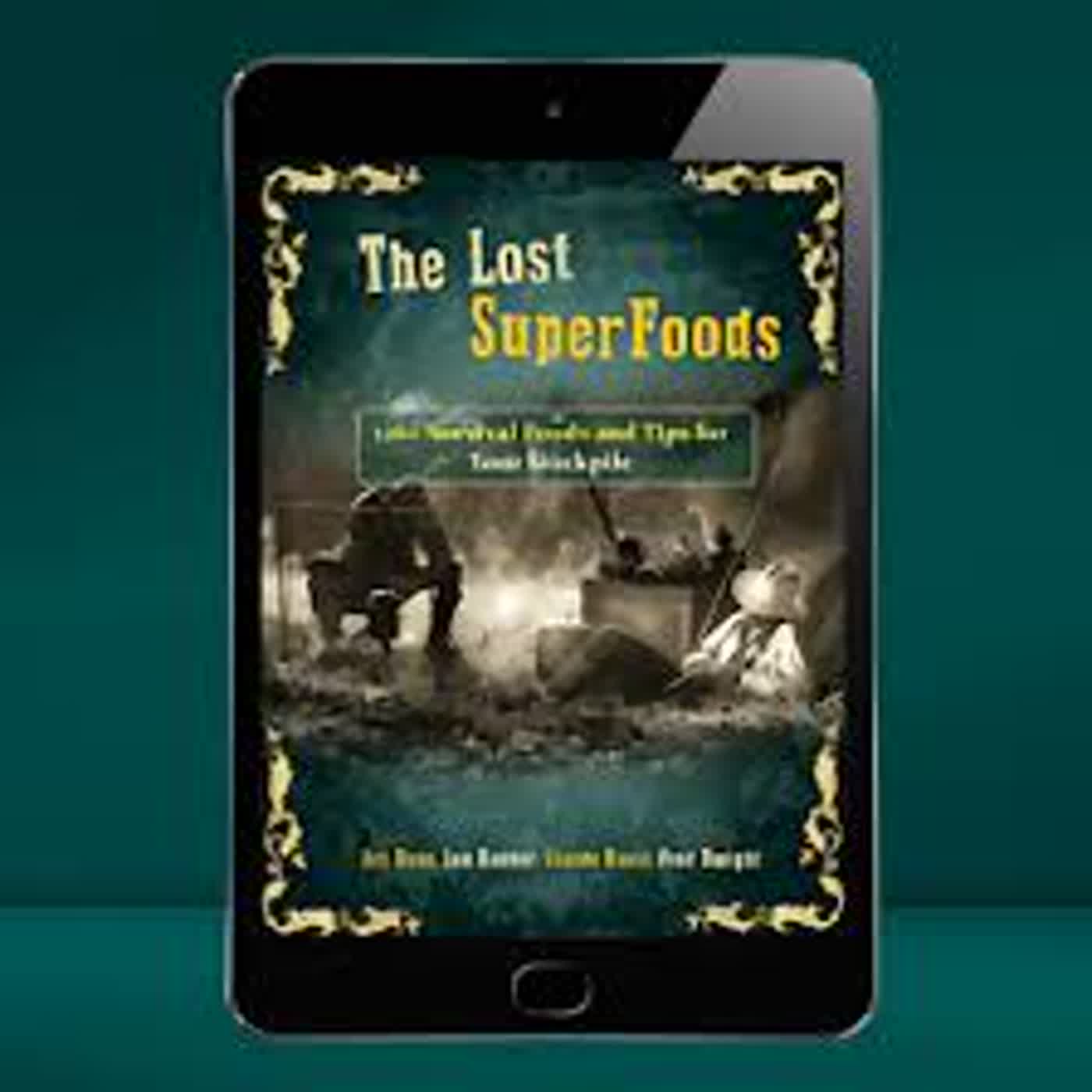
The Lost SuperFoods Review (2026): Is This the Ultimate Survival Food Guide?
Florian Wirtz2026-05-1200:01:16
In the unpredictable landscape of 2026, food security has moved from the fringes of "prepper" culture to a mainstream necessity. With rising grocery costs, supply chain vulnerabilities, and the increasing frequency of extreme weather, the ability to store and prepare high-calorie, shelf-stable nutrition at home is no longer optional—it is a critical survival skill.
👉Don’t Miss Out — Click Here To Purchase From Official Website
The Lost SuperFoods has emerged as the definitive manual for this new era of self-reliance. It isn’t just a cookbook; it is a meticulously researched archive of forgotten "survival foods" that kept our ancestors alive through famines, wars, and economic collapses. This 1000+ word review explores whether this 270-page guide is the ultimate "insurance policy" for your pantry or just a collection of outdated recipes.
The Lost SuperFoods is a comprehensive physical and digital guide containing over 126 forgotten survival foods and storage techniques. Compiled by Art Rude, a survival expert and historian, the book focuses on calorie-dense, nutrient-rich foods that can be made from inexpensive ingredients and stored for years—sometimes decades—without refrigeration.
The core philosophy of the book is "Independence from the Grid." While modern survivalism often focuses on expensive freeze-dried "astronaut food," The Lost SuperFoods teaches you how to create your own high-stakes pantry using methods perfected by the Vikings, the pioneers, and Civil War soldiers.
The "Lost" aspect of these superfoods refers to the natural preservation methods that have been pushed aside by the advent of modern refrigeration. The book focuses on three primary pillars of food science:
Bacteria require moisture to thrive. The Lost SuperFoods teaches ancient dehydration techniques, such as the "Great Depression Lard Meat" and "Portable Soup," which remove moisture and use natural barriers to create an environment where spoilage is biologically impossible.
In a survival situation, calories are energy. The recipes in this guide are curated for their high calorie-to-weight ratio. By focusing on healthy fats and complex proteins, the book ensures that a small portion of "The Lost SuperFood" can sustain an adult for an entire day of physical labor.
The manual utilizes salt, fat, sugar, and fermentation as natural shields. These methods do not just "keep food from rotting"; they often enhance the nutritional profile over time, making the food more bioavailable for the human body.
👉Don’t Miss Out — Click Here To Purchase From Official Website
The 2026 edition of the book includes several standout entries that have become staples in the survival community:
The US Doomsday Ration: Originally developed by the US military for extreme fallout conditions, this "superfood" costs only cents to make and provides enough nutrition to survive a complete grid-down scenario.
The Long-Lasting Bread of the 1800s: A recipe for a specific type of bread that doesn't go moldy or stale for months. Unlike modern loaves filled with chemicals, this uses a unique sourdough-style fermentation.
The "Lard Meat" Technique: A method used by our great-grandparents to store meat in jars for over two years without a freezer, keeping the meat tender, flavorful, and safe to eat.
The Viking Survival Food: A high-protein, calorie-dense snack used by Norse explorers to stay nourished during month-long sea voyages in freezing temperatures.
Fruit Leather and "Pemmican": Detailed instructions on how to create the ultimate survival "energy bars" using only meat, berries, and suet—foods that provide 100% of your daily nutritional needs in a pocket-sized serving.
When you access The Lost SuperFoods in 2026, the package typically includes several high-value digital supplements designed to round out your self-sufficiency:
An Underground Year-Round Greenhouse: A guide on how to grow your own food in a 4-season backyard greenhouse for less than $200.
Projects for Self-Sufficiency: Instructions on building a simple solar oven, a pressurized water system, and a smokehouse.
The Survival Medicine Checklist: A companion guide to the medical needs you must account for when traditional pharmacies are unavailable.
Verified buyers in 2026 cite several primary reasons for adding this book to their library:
By learning to make your own shelf-stable food from bulk ingredients like flour, salt, and lard, you can build a 6-month food supply for a fraction of the cost of buying pre-packaged emergency meals.
Our modern grocery stores rely on "just-in-time" delivery. A minor disruption can lead to empty shelves in 48 hours. The Lost SuperFoods gives you the power to bypass the grocery store entirely during a crisis.
Modern "emergency food" is often loaded with sodium, preservatives, and artificial flavors. The recipes in this manual are whole-food based, providing the vitamins and minerals necessary to maintain cognitive function and physical strength under stress.
👉Don’t Miss Out — Click Here To Purchase From Official Website
ProsConsPhysical Book: A 270-page physical copy that works when the power is out.Labor Intensive: Some recipes require several hours of preparation.High-Quality Photos: Includes color pictures of every step of the process.Specific Ingredients: You may need to source items like "suet" or bulk salt.Economical: Teaches you how to build a food bank for $5 a week.Information Overload: With 126+ foods, it can be overwhelming for beginners.Risk-Free: Backed by a 60-day, no-questions-asked money-back guarantee.Shipping: High demand in 2026 sometimes leads to shipping wait times.
Based on extensive review and historical verification, The Lost SuperFoods is a 100% legitimate and authoritative resource. It is not a collection of "fluff" or untested theories. Each technique is backed by historical data—showing that these foods actually kept people alive during the most trying times in human history.
The author, Art Rude, is well-regarded for his commitment to accuracy. The 2026 edition is professionally printed, well-indexed, and serves as a functional tool for any kitchen.
The Lost SuperFoods is more than a book; it is a transfer of power. It takes the power away from the industrial food complex and gives it back to the individual. Whether you are worried about the next "black swan" event or you simply want to lower your monthly grocery bill by embracing traditional methods, this guide is an invaluable asset.
In 2026, the most dangerous thing you can be is dependent. This book is the first step toward true independence.
Final Rating: 4.9/5 Stars
👉Don’t Miss Out — Click Here To Purchase From Official Website
Do I need a lot of space to store these foods?
No. Many of the "Lost SuperFoods" are designed to be extremely compact. You can store a 3-month supply for a family of four in a standard closet or under a bed.
Are the recipes hard to follow?
The book is written for beginners. Each recipe includes a "Nutrition Facts" box, a list of required tools, and color photos for every stage of the cooking and storage process.
What is the shelf life of these foods?
Depending on the specific food and storage method, shelf lives range from 2 years to over 20 years. The book specifically marks the "Longest Lasting" foods for those building a permanent stockpile.